Traditionally, Inconel 625 fabricated by CMT-WAAM often suffers from challenges such as non-uniform microstructure, localized strain concentration, and the difficulty in simultaneously achieving high strength and good ductility. To address this challenge, a team from Nanjing University of Science and Technology has proposed a biomimetic serrated structure design strategy. By synergistically controlling the geometric structure and microstructural features, this approach enhances the material's performance to adjust deformation uniformly.
Based on the above research background, a collaborative team from Nanjing University of Science and Technology, together with partners including the University of Lisbon (Portugal) and Enigma, published a latest research paper titled “Enhancing strength-ductility synergy in CMT-WAAM Inconel 625 via a bio-inspired zigzag heterostructure” in the international journal Materials Science & Engineering A (https://doi.org/10.1016/j.msea.2026.150464). In this work, Dr. Shen Jiajia and Master student Han Yanjun from the School of Materials Science and Engineering at Nanjing University of Science and Technology are the co-first authors; Professors Wang Kehong, Zhang Yong (also from the same school), and Professor Joao Pedro Olivelia from the University of Lisbon are the co-corresponding authors. This study systematically elucidates the mechanism by which the bio-inspired zigzag heterostructure enhances the strength-ductility synergy of CMT-WAAM Inconel 625.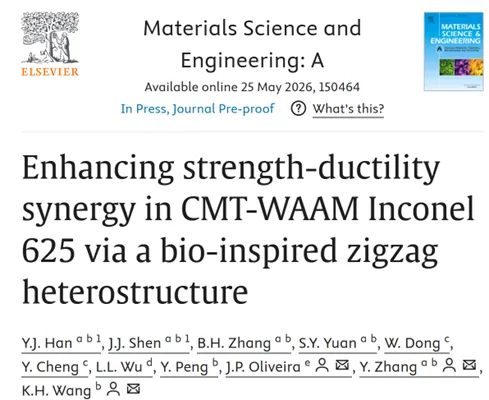
1.Research Background and Significance
CMT-WAAM combines the low heat input of cold metal transfer processes with the high deposition efficiency of WAAM, making it ideal for the rapid fabrication of large-scale metal components. For nickel-based alloys such as Inconel 625, this technology offers significant advantages in improving manufacturing efficiency and reducing production costs.
However, in actual manufacturing, multiple thermal cycles during deposition process, interlayer remelting, and path planning collectively influence grain morphology, crystallographic orientation, and local stress/strain distribution. Relying solely on conventional process parameter optimization often makes it difficult to achieve both high strength and high ductility simultaneously. Therefore, actively regulating and controlling material deformation behavior through microstructural design has become an important approach to enhancing the overall performance of WAAM-fabricated alloys.
Hierarchical structures in nature, such as seashells, bones, and serrated interfaces, often achieve excellent damage tolerance through mechanisms like "geometric interlocking, strain partitioning, and crack deflection." Drawing inspiration from this biomimetic design philosophy, this study constructs a zigzag architecture in CMT-WAAM Inconel 625, providing a new microstructural design approach for simultaneously enhancing the strength and ductility of additively manufactured alloys.
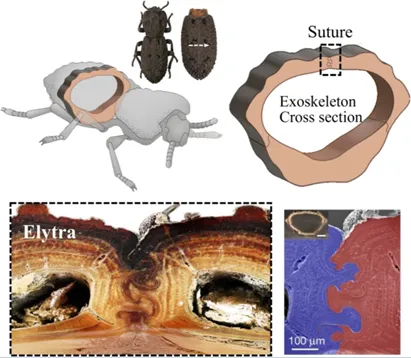
Figure 1: Schematic of the bio-inspired zigzag structure design concept
2、Experimental details
In this study, Inconel 625 alloy specimens were deposited through the CMT-WAAM process, and a serrated structure with spatial undulations was constructed through toolpath planning. This strategy eliminates the single flat bonding interface between interlayers, instead forming controllable structural units at both the macroscopic geometric and microscopic structural levels.
To comprehensively reveal the influence of structural design on microstructure and characteristics of Inconel625 alloy, this study employs a multiscale characterization approach: microstructural evolution is analyzed using techniques such as optical microscopy, scanning electron microscopy, and electron backscatter diffraction; mechanical properties are evaluated through tensile testing and fractographic analysis; and by integrating local orientation differences, dislocation structures, and deformation characteristics, the mechanism underlying the synergistic enhancement of strength and ductility in the material is further elucidated.
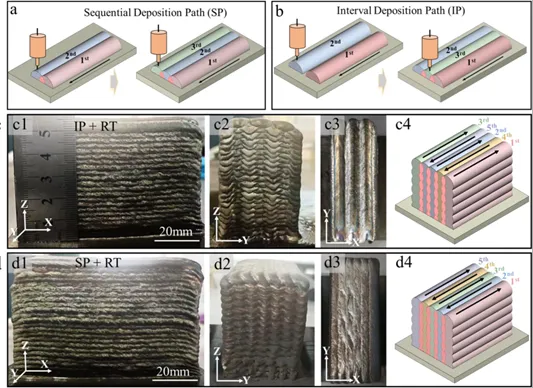
Figure 2: Deposition Strategy
3、Results and Discussion
3.1 Construction of bio-inspired zigzag structure
Compared with conventional straight-path or uniform layered structures, the zigzag structure introduces periodic turns and interface undulations in geometry, creating regions with different local deformation responses within the material. Under tensile loading, mutual constraint and cooperative deformation occur among these different regions, thereby helping to disperse local strain concentrations.
The key to this structural design lies not merely in altering the deposition path, but in jointly regulating the deformation mode through path-induced microstructural variations and geometric undulations. In this way, the material can achieve a more stable work-hardening behavior while maintaining its overall load-bearing capacity.
3.2 Microstructural characteristics
Microstructural analysis reveals that the heat input, interlayer remelting, and path variations during the CMT-WAAM process collectively influence the grain morphology and local microstructural distribution. The microstructural differences in the zigzag-structured regions provide a basis for deformation, enabling richer strain partitioning and dislocation accumulation behaviors during the deformation process.
It is worth noting that the zigzag structure does not imply the introduction of weak interfaces. A properly designed zigzag interface can enhance load transfer capability through geometric interlocking and microstructural continuity, thereby reducing the risk of premature failure at the interface.
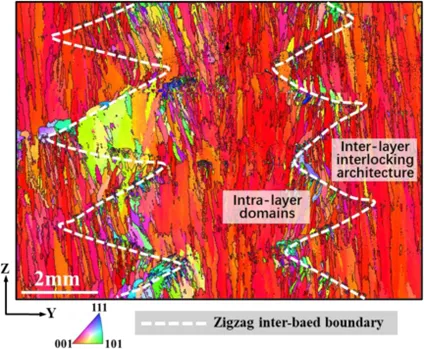
Figure 3: Schematic of microstructural characteristics in the bio-inspired zigzag structure
3.3 Room-temperature mechanical properties
Mechanical property tests show that the bio-inspired zigzag structure effectively improves the strength-ductility synergy of CMT-WAAM Inconel 625. Compared with a conventional uniform structure, the zigzag structure delays plastic instability through enhanced local strain coordination and work hardening capability, thereby achieving superior overall mechanical properties.
The synergistic enhancement of strength and ductility is a core highlight of this study. During tensile deformation, the zigzag structure can alter the strain evolution path, enabling different regions within the material to jointly participate in plastic deformation, thereby avoiding premature damage concentration in local areas.
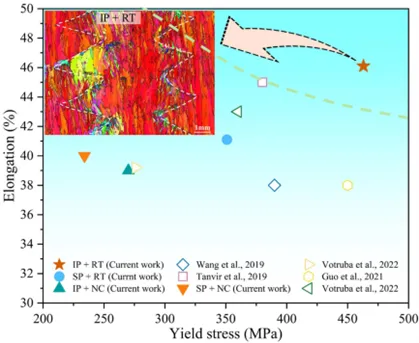
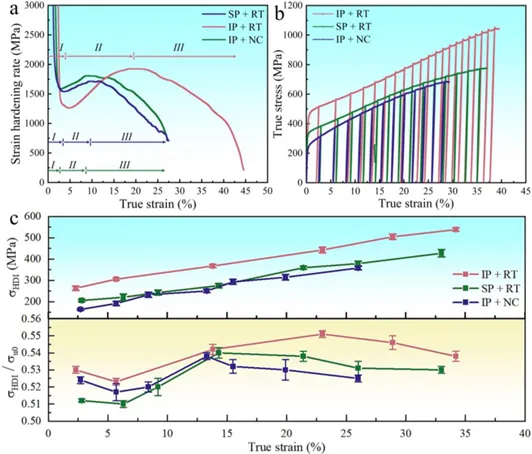
Figure 4: Synergistic Enhancement of Strength and Ductility in CMT-WAAM Inconel 625
3.4 Deformation mechanism
Mechanism analysis shows that the zigzag structure can induce a more complex local strain distribution and promote cooperative deformation between the soft and hard regions within the zigzag structure. During deformation, mutual constraints occur between the geometrically undulating regions and the adjacent microstructural regions, thereby facilitating dislocation accumulation, back-stress strengthening, and enhanced work hardening capability.
This mechanism enables the material to no longer rely solely on uniform plastic deformation when subjected to external loading, but instead to accommodate strain through the synergistic cooperation of multiple regions. As a result, the material maintains good ductility while achieving increased strength, providing an important basis for the integrated design of structure and properties in CMT-WAAM nickel-based alloys.
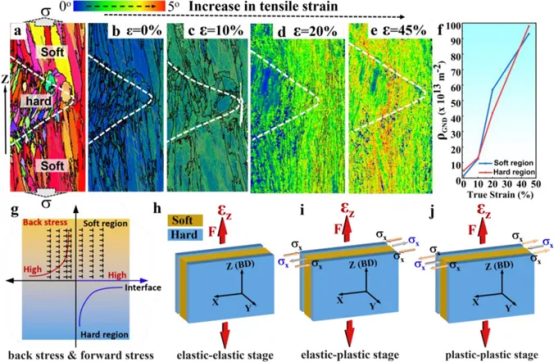
Figure 5: Schematic of the mechanism of bio-inspired zigzag structure in regulating deformation behavior
4、Conclusion
This study introduces the biomimetic structural design concept into the fabrication of CMT-WAAM Inconel 625 alloy and proposes a novel strategy for enhancing the synergy between strength and ductility through a serrated structure. This strategy breaks away from the conventional approach that relies solely on optimizing process parameters, emphasizing instead the active control of material deformation behavior via the design of structural units.
The research results indicate that the serrated structure can improve the local strain distribution, enhance the coordinated deformation capability among different regions, and boost the material’s work-hardening capacity. This mechanism helps alleviate the common issue of localized strain concentration in additively manufactured alloys, thereby achieving a better match between strength and ductility.
This achievement not only enriches the research on toughening mechanisms of WAAM nickel-based alloys but also provides new design ideas and technical references for high-performance additive manufacturing of aerospace, energy equipment, and complex large-scale metal components.
5、Paper link
Paper Title:Enhancing strength-ductility synergy in CMT-WAAM Inconel 625 via a bio-inspired zigzag heterostructure
Journal:Materials Science & Engineering A
Author:Y.J. Han, J.J. Shen, B.H. Zhang, S.Y. Yuan, W. Dong, Y. Cheng, L.L. Wu, Y. Peng, J.P. Oliveira, Y. Zhang, K.H. Wang
DOI:
https://doi.org/10.1016/j.msea.2026.150464
 Hot News
2025-06-30
2025-07-04
2025-07-01

 EN
EN