
 EN
EN
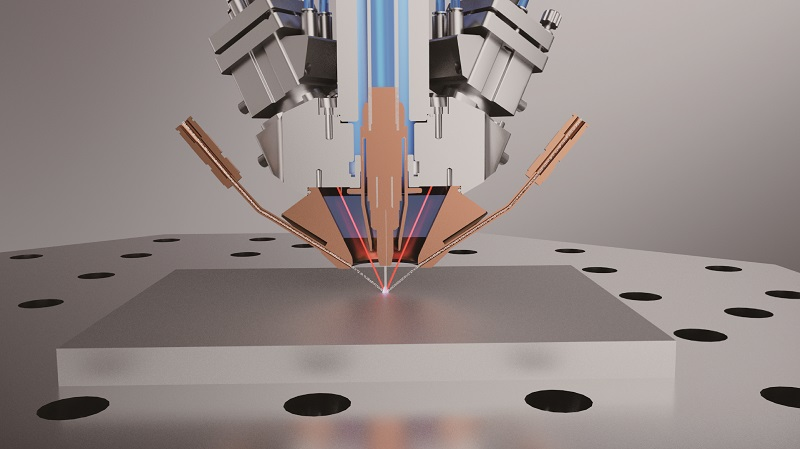
Accelerating Shipbuilding Material Prototyping
Rapid iteration of corrosion-resistant alloy composites for marine environments
Traditional shipbuilding material development relies on lengthy casting processes—often requiring months per alloy variant. Additive manufacturing transforms this workflow: researchers can now produce small test specimens of nickel-aluminum-bronze (NAB) composites and duplex stainless steels in hours, not weeks. This enables parallel testing of dozens of formulations under simulated ocean conditions—including salt spray exposure and electrochemical analysis—within a matter of weeks. Such comprehensive evaluation was previously impractical due to time and cost constraints.
The acceleration is critical for addressing marine corrosion, where salinity, temperature gradients, and microbial activity demand highly tailored material responses. By rapidly iterating across compositional and microstructural variables, engineers identify optimal corrosion resistance, mechanical strength, and manufacturability faster than ever before. The maritime industry incurs tens of billions in annual corrosion-related costs (DNV, 2023), making accelerated alloy development a strategic priority—not just for performance, but for reducing lifecycle maintenance and replacement expenses. Faster prototyping also streamlines certification with classification societies, shortening the path from lab to vessel.
Reducing physical prototype lead time from months to days in shipbuilding R&D
Physical prototyping of complex ship components—such as propeller brackets, stern tube housings, or hull penetrators—traditionally required over six months, driven by patternmaking, foundry scheduling, and multi-stage machining. Metal 3D printing eliminates these bottlenecks by building near-net-shape parts directly from CAD models. A stern tube seal housing that once took 14 weeks can now be printed, heat-treated, and finished in under 72 hours. Industry-wide adoption has yielded prototype lead time reductions exceeding 90% (Lloyd’s Register, 2023).
This speed compresses the entire R&D cycle, enabling design validation and regulatory review within a single build program. It also unlocks new design freedoms: topology-optimized brackets reduce weight by up to 40% while maintaining structural integrity; conformal cooling channels improve thermal management in propulsion systems. These innovations—previously limited by casting or machining constraints—are now viable at scale. As a result, additive manufacturing is no longer just a prototyping tool—it’s reshaping naval architecture and accelerating time-to-water for next-generation vessels.
Enabling Function-Integrated, High-Performance Shipbuilding Components
Topology-optimized hull fittings with embedded fluid channels
Additive manufacturing uniquely supports the integration of function into form. Hydraulic manifolds, valve bodies, and hull penetrators can now embed fluid pathways directly within load-bearing structures—eliminating external piping, flange joints, and associated leak points. Topology optimization software guides design toward minimal mass while preserving flow efficiency and pressure integrity. Weight savings of 40–60% are routinely achieved versus bolted or welded assemblies, directly contributing to fuel efficiency and emissions reduction targets mandated by IMO 2030/2050 frameworks.
Balancing strength-to-weight gains with maritime certification requirements
High-strength aluminum alloys and nickel-based superalloys offer compelling strength-to-weight and corrosion-resistance profiles—but their qualification demands rigor. Classification societies require full traceability of process parameters (laser power, scan speed, layer thickness), post-processing (HIP, stress relief), and mechanical testing (tensile, fatigue, fracture toughness) under representative marine loading and environmental conditions. Certification is no longer a post-hoc hurdle: it’s built into the digital thread—from design simulation through print log archiving to non-destructive evaluation (NDE) reporting. This integrated approach ensures printed components meet the same safety-critical standards as conventionally manufactured ones—without sacrificing agility.
Reducing Waste and Supply Chain Risk Across the Shipbuilding Lifecycle
3D printing fundamentally restructures spare parts logistics for aging naval and commercial fleets. Rather than storing thousands of low-turnover components—or scrapping vessels due to unobtainable castings—operators maintain digital inventories of certified part files. When a legacy bracket, valve cover, or sensor housing fails, it can be printed on-site or via qualified service bureau in days—not months. This model eliminates obsolete inventory waste, reduces scrap metal and energy use from overproduction, and decouples operations from supplier continuity risks. For vessels whose original foundries have closed or molds deteriorated beyond reuse, digital files serve as durable, version-controlled replacements—preserving operational readiness without tying capital to slow-moving stock.
Future-Proofing Shipbuilding R&D: AI, Generative Design, and Maritime Standards
DNV GL’s 2023 framework for qualifying additively manufactured marine-grade steels
In 2023, DNV introduced a dedicated qualification framework for additively manufactured marine-grade steels—a milestone in standardizing AM for structural applications. The framework defines clear protocols for microstructure characterization, fatigue life assessment in saline environments, weldability testing, and batch-to-batch consistency verification. It aligns with ISO/ASTM 52900 and supplements IACS Unified Requirement Z17, providing shipbuilders with a validated pathway to certification. By codifying best practices for data capture, NDE integration, and mechanical property mapping, DNV’s framework bridges the gap between rapid innovation and maritime safety assurance—accelerating industrial confidence and adoption across the global shipbuilding ecosystem.
FAQ Section
What is additive manufacturing in shipbuilding?
Additive manufacturing, commonly known as 3D printing, is a process that builds parts layer by layer directly from digital models. In shipbuilding, it enables rapid prototyping, the creation of complex designs, and the production of high-performance, corrosion-resistant components.
How does additive manufacturing reduce prototype lead times?
Traditional methods rely on casting, patternmaking, and multi-stage machining, which often take months. 3D printing eliminates these bottlenecks by directly producing near-net-shape parts in days, significantly compressing the R&D cycle.
What are topology-optimized shipbuilding components?
Topology-optimized components are designed to minimize weight while maintaining necessary strength. Additive manufacturing enables these designs by embedding fluid channels or removing unnecessary material without compromising performance.
What role does certification play in additive manufacturing for shipbuilding?
Certification ensures safety-critical standards are met for printed components. This includes traceability of process parameters, post-processing, and mechanical testing as required by classification societies and their frameworks.
How does 3D printing help reduce waste in shipbuilding supply chains?
By enabling on-demand manufacturing of spare parts, 3D printing eliminates the need for large inventories of rarely used items, reducing obsolete inventory waste and decoupling operational risks from supplier continuity.
Table of Contents
- Accelerating Shipbuilding Material Prototyping
- Enabling Function-Integrated, High-Performance Shipbuilding Components
- Reducing Waste and Supply Chain Risk Across the Shipbuilding Lifecycle
- Future-Proofing Shipbuilding R&D: AI, Generative Design, and Maritime Standards
-
FAQ Section
- What is additive manufacturing in shipbuilding?
- How does additive manufacturing reduce prototype lead times?
- What are topology-optimized shipbuilding components?
- What role does certification play in additive manufacturing for shipbuilding?
- How does 3D printing help reduce waste in shipbuilding supply chains?