
 EN
EN
How Wire Printing Boosts Metal 3D Printing Efficiency
An aerospace manufacturer producing titanium structural brackets compared two additive manufacturing approaches for a 45-kilogram Ti-6Al-4V component. The powder-based laser DED system deposited at 0.6 kg/hour with 60% material utilization — approximately 75 kg of powder was consumed to produce a 45 kg part, with 30 kg of unmelted powder requiring sieving and recycling. A wire printing DED system deposited the same geometry at 1.0 kg/hour with near-100% material utilization — 45.5 kg of wire produced a 45 kg finished part. The wire approach delivered the component in 45 build hours versus 75 hours, with feedstock cost 40% lower per kilogram of deposited metal.
Wire printing in metal additive manufacturing — whether arc-based (WAAM), laser-based, or plasma-based — changes the fundamental economics of the process. The differences between wire and powder go far beyond the physical form of the feedstock.
Wire vs Powder — The Efficiency Gap
Deposition Rate
The deposition rate difference between wire and powder is rooted in physics. A powder-fed wire printing alternative must carry powder particles in a gas stream to the melt pool, where only particles that intersect the melt pool surface adhere — the remainder is carried away by the gas flow or bounces off the solid material surrounding the pool. The deposition efficiency of powder-fed systems typically ranges from 50-70%, meaning 30-50% of the purchased powder becomes overspray requiring collection, sieving, and potential reuse.
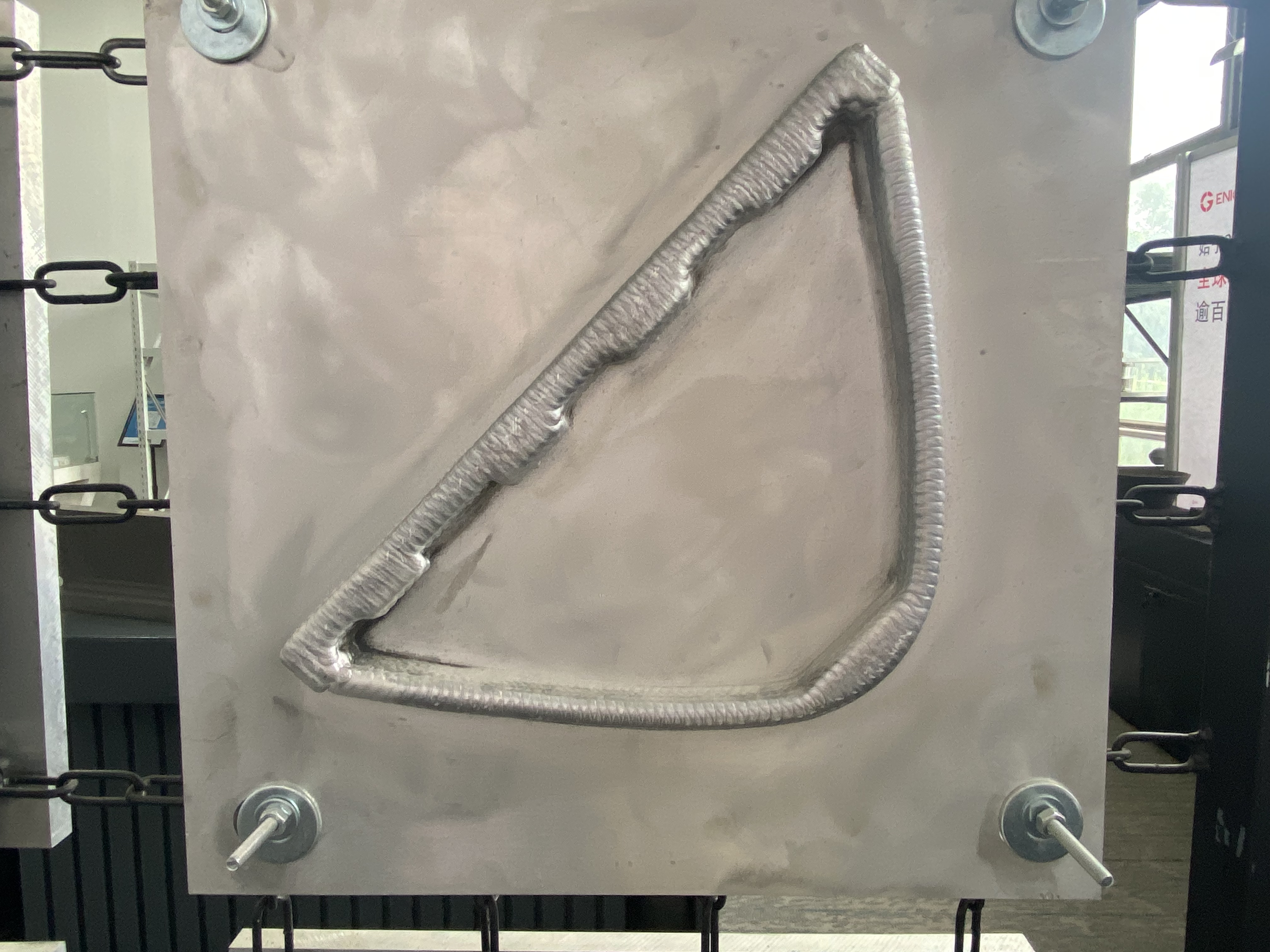
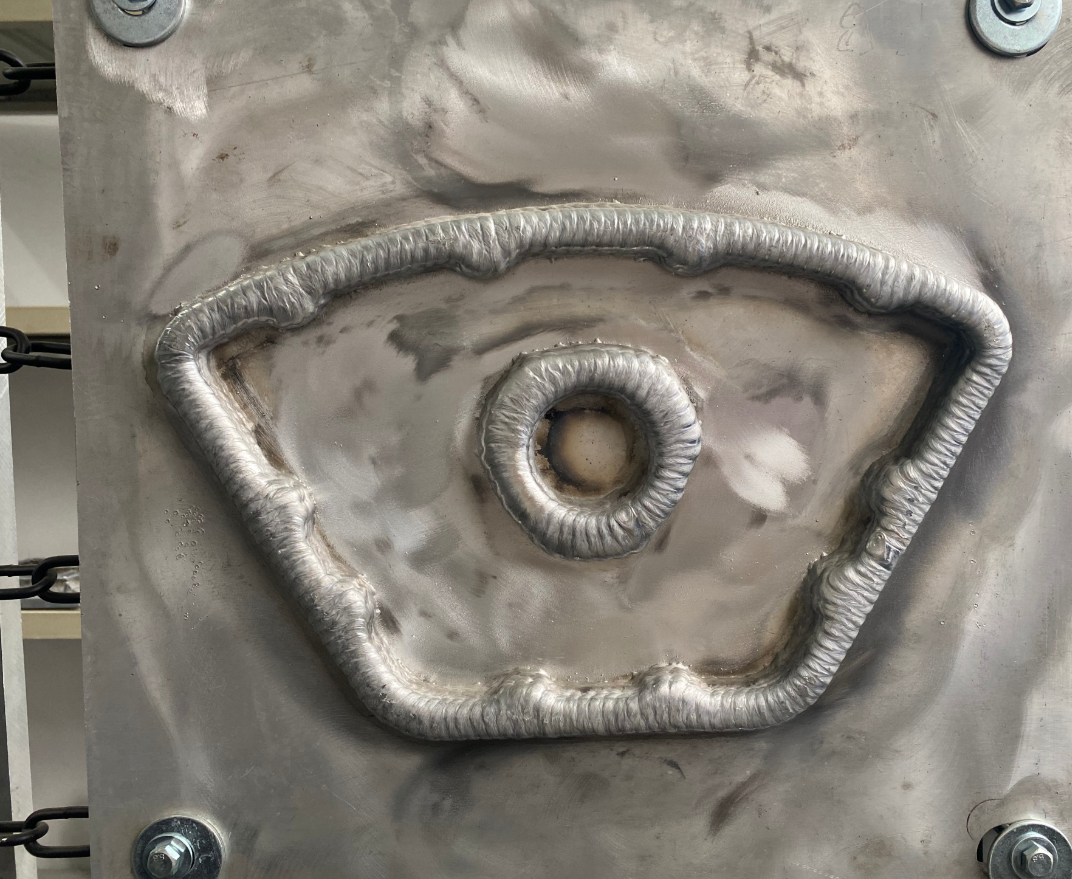
Wire-fed systems feed a continuous solid filament directly into the melt pool. Every millimeter of wire becomes deposited metal. The deposition efficiency approaches 100% — only the small length of wire between the feed nozzle and the melt pool is subject to any loss, and modern wire wire printing systems with synchronized feed control reduce even that to negligible levels.
The rate difference is substantial. Laser wire feeding achieves deposition rates ≥1.0 kg/hour under equivalent laser power conditions where powder feeding delivers approximately 0.6 kg/hour — a 40% productivity advantage. Arc-based wire systems using Cold Metal Transfer (CMT) technology achieve deposition rates of 2-5 kg/hour for steel and nickel alloys, scaling to 10 kg/hour for high-deposition-rate configurations on large components. The highest powder bed fusion systems, by comparison, operate at 0.01-0.1 kg/hour.
Material Utilization
The material utilization gap is even more decisive than the deposition rate gap. A powder-based system typically achieves 60% utilization — 100 kg of purchased powder yields 60 kg of deposited metal. The remaining 40 kg is a combination of overspray (recoverable through sieving but degraded by partial melting and oxidation), spatter (unrecoverable), and condensate on chamber walls.
Wire printing achieves essentially 100% material utilization. The wire feedstock is a finished industrial product — drawn to precise diameter tolerance (±0.01 mm), with controlled composition, surface cleanliness, and cast and helix specifications that ensure consistent feeding. The wire cost per kilogram is typically 40-60% lower than equivalent powder because atomizing metal into spherical powder with tight particle size distribution is an energy-intensive process that adds $15-50 per kilogram to the feedstock cost compared to wire drawing.
Why Wire Enables Larger, Faster Builds
The physics of powder feeding create a practical size limit for powder-based additive manufacturing. As the melt pool area increases to accommodate higher deposition rates, the powder stream must cover a larger area uniformly. The gas flow dynamics become increasingly difficult to control — powder particles that arrive at the edge of the pool may not fully melt, creating lack-of-fusion defects. Wire feeding solves this problem because the wire enters the melt pool at a single point regardless of pool size, and the melt pool dynamics distribute the material.
This is why large-scale additive manufacturing — components exceeding one meter in any dimension — overwhelmingly uses wire-based processes. A six-meter aluminum ship propeller printed by wire printing WAAM technology is commercially practical; the same component would require a powder bed or powder DED system of prohibitive size and cost with deposition times measured in weeks rather than days.
Cost-Per-Kilogram
The combined effect of higher deposition rate, higher material utilization, and lower feedstock cost produces a cost-per-kilogram advantage for wire printing that makes large metal additive parts economically viable. For titanium alloys, wire-based deposition costs 150-300 per kilogram of finished part compared to 400-800 per kilogram for powder-based laser DED and $800-2,000+ per kilogram for powder bed fusion. For steel and nickel alloys, the ratios are similar though the absolute costs are lower.
Frequently Asked Questions
How much faster is wire printing compared to powder-based metal 3D printing?
Laser wire feeding deposits at ≥1.0 kg/hour versus 0.6 kg/hour for equivalent laser powder feeding — a 40% productivity advantage. Arc-based wire systems (WAAM) achieve 2-5 kg/hour for steel and nickel alloys, and up to 10 kg/hour in high-deposition configurations. The fastest powder bed fusion systems operate at 0.01-0.1 kg/hour, making wire printing 10-500 times faster depending on the comparison.
Why does wire printing achieve 100% material utilization?
Wire is fed as a continuous solid filament directly into the melt pool. Every millimeter of wire becomes deposited metal. Powder-fed systems lose 30-50% of feedstock as overspray — particles that miss the melt pool and are carried away by the gas stream. The near-perfect transfer efficiency of wire eliminates the material loss inherent to powder-based processes.
Is wire-printed metal as strong as powder-printed or traditionally manufactured metal?
Yes. Wire printing produces fully dense deposits with mechanical properties that meet or exceed wrought material specifications. For Inconel 625, wire-DED components achieve yield strengths of 401 MPa, tensile strengths of 724 MPa, and elongation of 57%. The rapid solidification in DED processes produces fine-grained microstructures that are frequently superior to cast material and comparable to forged material.
What metals can be used for wire printing?
Titanium alloys (Ti-6Al-4V), nickel-based superalloys (Inconel 625, 718), stainless steels (316L, 17-4PH), aluminum alloys (2319, 4043, 5356), carbon steels, and cobalt-chrome alloys are commercially available as DED-grade wire. Wire manufacturers increasingly offer alloy compositions optimized specifically for additive manufacturing thermal cycles rather than for welding applications.
What are the surface finish limitations of wire printing?
As-deposited wire printing surfaces have a characteristic layer texture with surface roughness typically Ra 10-25 μm — rougher than powder bed fusion (Ra 5-15 μm) but comparable to sand casting. Functional surfaces (bearing journals, seal surfaces, mating faces) are finished by CNC machining to the required tolerance and surface specification. Hybrid additive-subtractive systems perform deposition and machining in a single setup, eliminating refixturing.
How does wire printing handle reactive metals like titanium?
Titanium wire printing requires inert atmosphere shielding — typically high-purity argon — in an enclosed chamber or through a localized shielding gas delivery system. The wire feedstock is not pyrophoric, unlike titanium powder which presents fire and explosion hazards. This safety advantage, combined with higher material utilization, makes wire the preferred feedstock for titanium additive manufacturing at industrial scale.