
 EN
EN
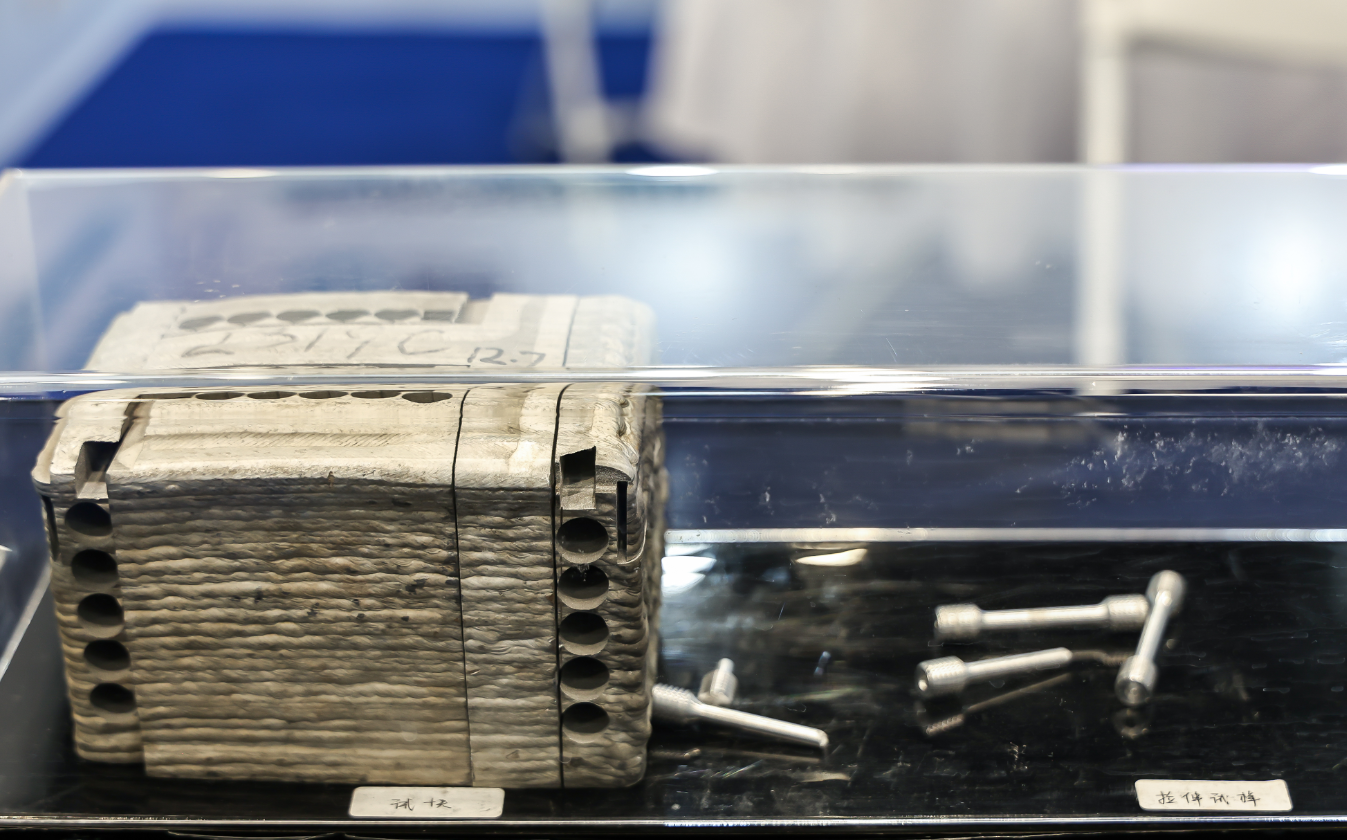
How DED Shortens Metal Material Development Cycles
A research team developing a new aluminum alloy for aerospace structural applications needed to evaluate 18 composition variants — each requiring cast billets, extrusion, heat treatment, machining into test specimens, and mechanical testing. The traditional approach would have consumed 14-18 months. Using DED (Directed Energy Deposition) with wire feedstock and CAM-specific path planning software, the team printed test coupons for all 18 variants in eight weeks. The software automatically generated optimized deposition paths for each composition, adjusting parameters for the specific melting characteristics of each variant. The fastest-performing candidates advanced to full qualification six months ahead of the traditional timeline.
DED eliminates the tooling barrier that has historically made metal alloy development slow, expensive, and conservative — organizations test fewer compositions because each one costs too much and takes too long.
The Traditional Material Development Bottleneck
Developing a new metal alloy for structural applications follows a path that the materials industry has used for decades: formulate the composition, melt and cast a small ingot, forge or roll the ingot into plate or bar, machine test specimens, conduct mechanical testing, analyze results, adjust the composition, and repeat. Each iteration requires tooling — casting molds, forging dies, extrusion dies — that costs 5,000-50,000 per set and takes four to eight weeks to manufacture. A development program that tests five iterations of three candidate alloys might consume 15 iterations, spend 150,000-750,000 on tooling, and require 18-24 months before the first production-scale heat is ordered.
The financial consequence is that materials development becomes risk-averse. Teams test narrow composition ranges around known alloys because the cost of exploring genuinely novel chemistry — compositions far from established grades — is prohibitive. The metallurgical discoveries that could produce step-change improvements in strength, corrosion resistance, or elevated-temperature performance remain unexplored because the iteration economics do not support exploration.
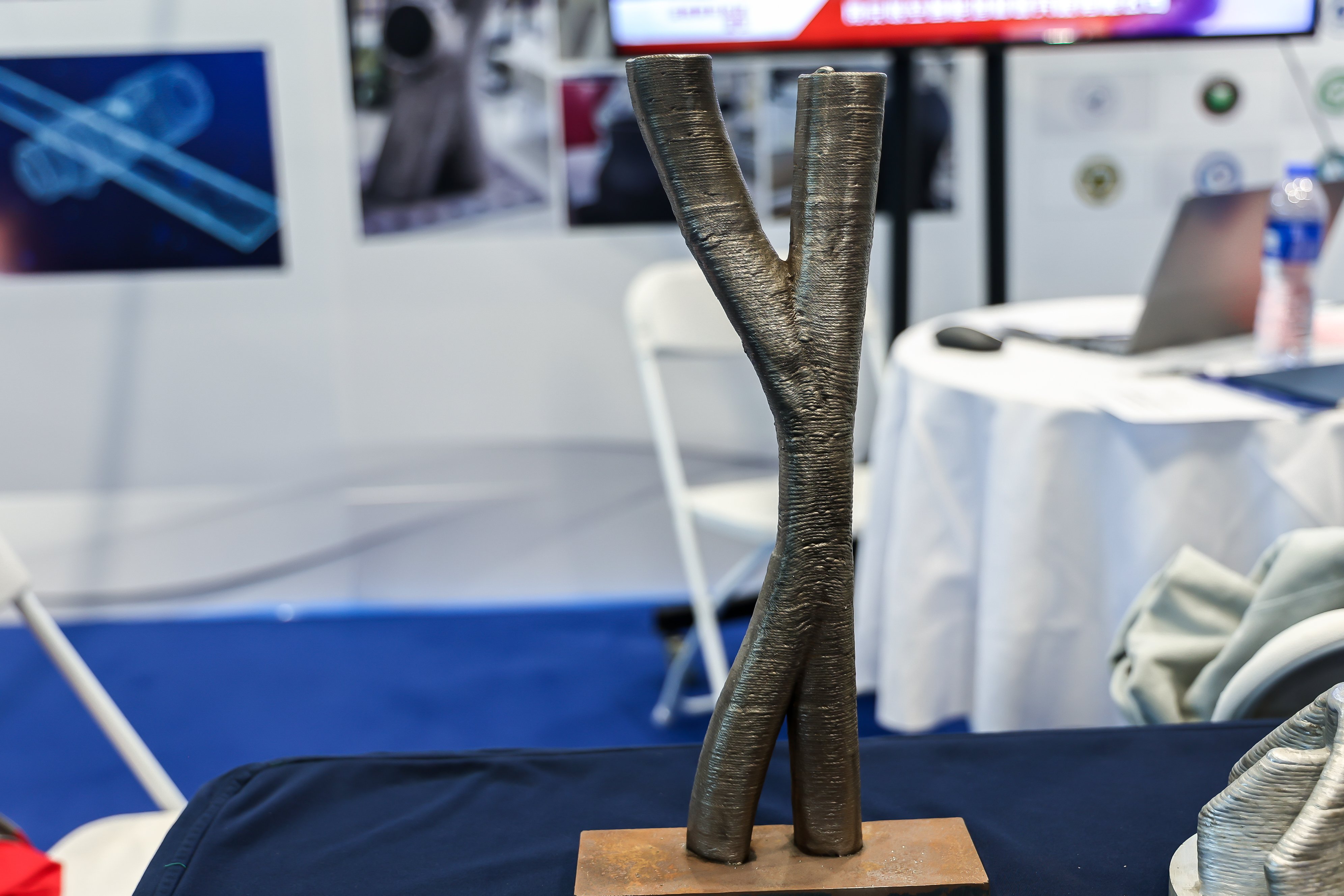
How DED Collapses the Iteration Timeline
Single-Step Fabrication
DED fabricates test specimens directly from metal powder or wire in a single step. There is no mold, no die, no extrusion tooling. The process deposits material layer by layer onto a build plate following a toolpath generated by additive manufacturing CAM software. A simple rectangular build from which tensile bars, fatigue specimens, and corrosion coupons will be machined can be printed in hours. The specimen geometry, which might be machined from a forged billet in the traditional approach, emerges from the DED process as a near-net-shape preform requiring only minimal finish machining.
The cycle time compression is dramatic. A single composition iteration in DED — from parameter selection to completed test specimens — requires three to ten days depending on specimen quantity and complexity, compared to eight to twelve weeks for the traditional cast-forge-machine cycle. Eight composition iterations that would consume a year in traditional development complete within two to three months. The cost per iteration drops from 10,000-50,000 to 500-2,000 in materials and machine time.
Software plays a decisive role in this acceleration. Dedicated DED CAM platforms generate toolpaths optimized for the specific heat source, material, and geometry. Path planning algorithms manage arc start and stop sequences, interlayer temperature control, and deposition speed — variables that, if left to manual programming, would require extensive trial-and-error for each new material. Automated path generation with simulation verification reduces the programming time per new composition from days to hours.
Gradient Material Printing
DED also enables gradient material testing — a capability no conventional process offers. By varying the ratio of two or more powder feedstocks or switching between wire compositions during a single build, a DED system can produce a single test coupon with a continuous composition gradient from, for example, 0% to 10% chromium content over a 100-millimeter length. Tensile specimens extracted at 10-millimeter intervals along the gradient provide mechanical property data for ten composition points from a single build — data that would require ten separate casting and forging trials conventionally.
The Enigma-NOVA University Lisbon joint research on Inconel 625 illustrates the impact of DED on material understanding. By systematically varying print path orientation while maintaining identical composition, the team identified that 90° interlayer path switching produced near-equiaxed grain structures with yield strength of 401 MPa and elongation of 57% — a strength-ductility combination superior to traditional hot-rolled Inconel 625. This type of process-property relationship discovery, which directly informs manufacturing specifications, would be prohibitively expensive to investigate through conventional metallurgical trials.
From Lab to Production
The same DED equipment used for material development can serve as the production system once the alloy and process are qualified. The process parameters validated on test coupons transfer to production components because the thermal history — cooling rate, interlayer temperature, deposit geometry — is controlled by the same software and hardware. This eliminates the scale-up gap between laboratory casting trials and production foundry runs that has historically added 6-12 months to new alloy introduction.
Frequently Asked Questions
How does DED reduce material development time compared to traditional methods?
DED eliminates the tooling required for each composition iteration — casting molds, forging dies, extrusion tooling — and fabricates test specimens directly in hours rather than weeks. A single iteration completes in 3-10 days versus 8-12 weeks conventionally. An eight-iteration development program that would require 12-18 months completes within 2-3 months using DED.
What is gradient material printing in DED?
Gradient printing varies the composition continuously during a single DED build by adjusting the ratio of two or more feedstock materials. A single test coupon contains a composition spectrum — for example, chromium content varying from 0% to 10% along its length — enabling mechanical property evaluation of multiple composition points from one build rather than requiring separate trials for each composition.
How does DED software accelerate process development?
Dedicated DED CAM software automatically generates optimized toolpaths for specific heat sources, materials, and geometries. Path optimization algorithms manage arc start/stop sequences, interlayer temperature, and deposition speed. Simulation with 360° dynamic visualization verifies accessibility and collision risks before the build begins, reducing trial-and-error programming from days to hours per new material.
Can DED-developed materials be produced at industrial scale?
Yes. The same DED equipment used for material development can serve as the production system once the alloy and process are qualified. Process parameters validated on test coupons transfer directly to production components because the thermal history — cooling rate, interlayer temperature, deposit geometry — is controlled identically. This eliminates the lab-to-production scale-up gap traditional in metallurgical development.
What metallurgical data can be obtained from DED test specimens?
Standard mechanical testing — tensile (yield, ultimate, elongation), fatigue (high-cycle and low-cycle), fracture toughness, hardness, and corrosion resistance — is performed on specimens machined from DED builds. Microstructural characterization via SEM, EBSD, and TEM provides grain size, phase distribution, and texture data. The rapid solidification inherent to DED produces fine-grained structures that often match or exceed conventionally processed material properties.
How many composition variants can DED test in a single development program?
With 3-10 day iteration cycles, a single DED system can test 15-30 composition variants within a 3-4 month development program — approximately three to five times the throughput of conventional methods at one-tenth the cost per variant. Gradient printing further multiplies throughput by testing multiple compositions within a single build, yielding composition-property curves rather than individual data points.