
 EN
EN
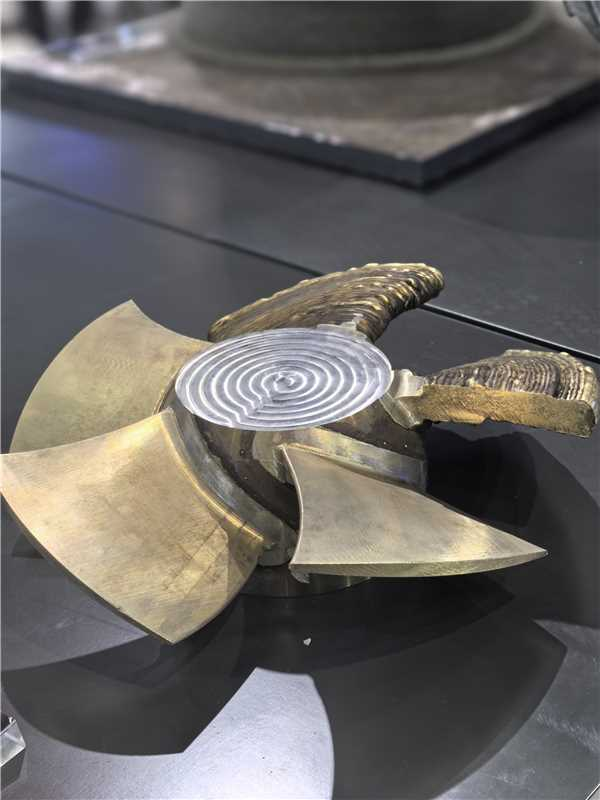
How DED Enhances Inconel 625 Material Performance
A joint research project between ENIGMA and NOVA University Lisbon, published in Materials Research Letters, systematically investigated how printing path design affects the microstructure and mechanical properties of DED-fabricated Inconel 625. The findings confirmed what process engineers had observed empirically: a 90° interlayer path switching strategy transforms the alloy's grain structure from directionally oriented columns to near-equiaxed grains, producing yield strength of 401 MPa, ultimate tensile strength of 724 MPa, and elongation of 57% — a strength-ductility combination that outperforms traditional hot-rolled Inconel 625.
Inconel 625 is a nickel-based superalloy prized for its combination of high-temperature strength, corrosion resistance, and weldability. But the conventional manufacturing route — vacuum induction melting followed by hot working — limits the geometries and sizes that can be economically produced. DED fundamentally changes both what can be made and how well it performs.
Why Processing Matters More Than Composition
The composition of Inconel 625 — approximately 58% nickel, 20-23% chromium, 8-10% molybdenum, and 3.15-4.15% niobium — is fixed by specification. What varies dramatically is the microstructure, and the microstructure determines the mechanical properties. In traditional casting, slow solidification produces coarse columnar grains several millimeters in length with pronounced crystallographic texture. In DED processing, solidification occurs in seconds rather than minutes, producing a fundamentally different grain structure — but the specific structure depends heavily on the print path strategy.
The conventional DED approach — depositing each layer along the same directional path (0° strategy) — produces columnar grains that grow epitaxially from the previous layer, creating a strongly oriented <001> crystallographic texture. This texture produces anisotropic mechanical properties: strength and ductility that vary depending on whether the load is applied parallel or perpendicular to the columnar grain direction. For components experiencing multi-axial stress — which describes virtually all real engineering applications — this anisotropy is undesirable.
How Print Path Design Transforms Properties
The breakthrough identified by the ENIGMA-NOVA research team involves rotating the deposition path by 90° between successive layers. This simple change in toolpath strategy has profound metallurgical consequences. When each layer is deposited perpendicular to the previous layer, the columnar grain growth that would otherwise continue across multiple layers is interrupted. The new layer solidifies on a surface with a different crystallographic orientation, and the remelting of the previous layer's surface provides new nucleation sites that promote equiaxed grain formation.
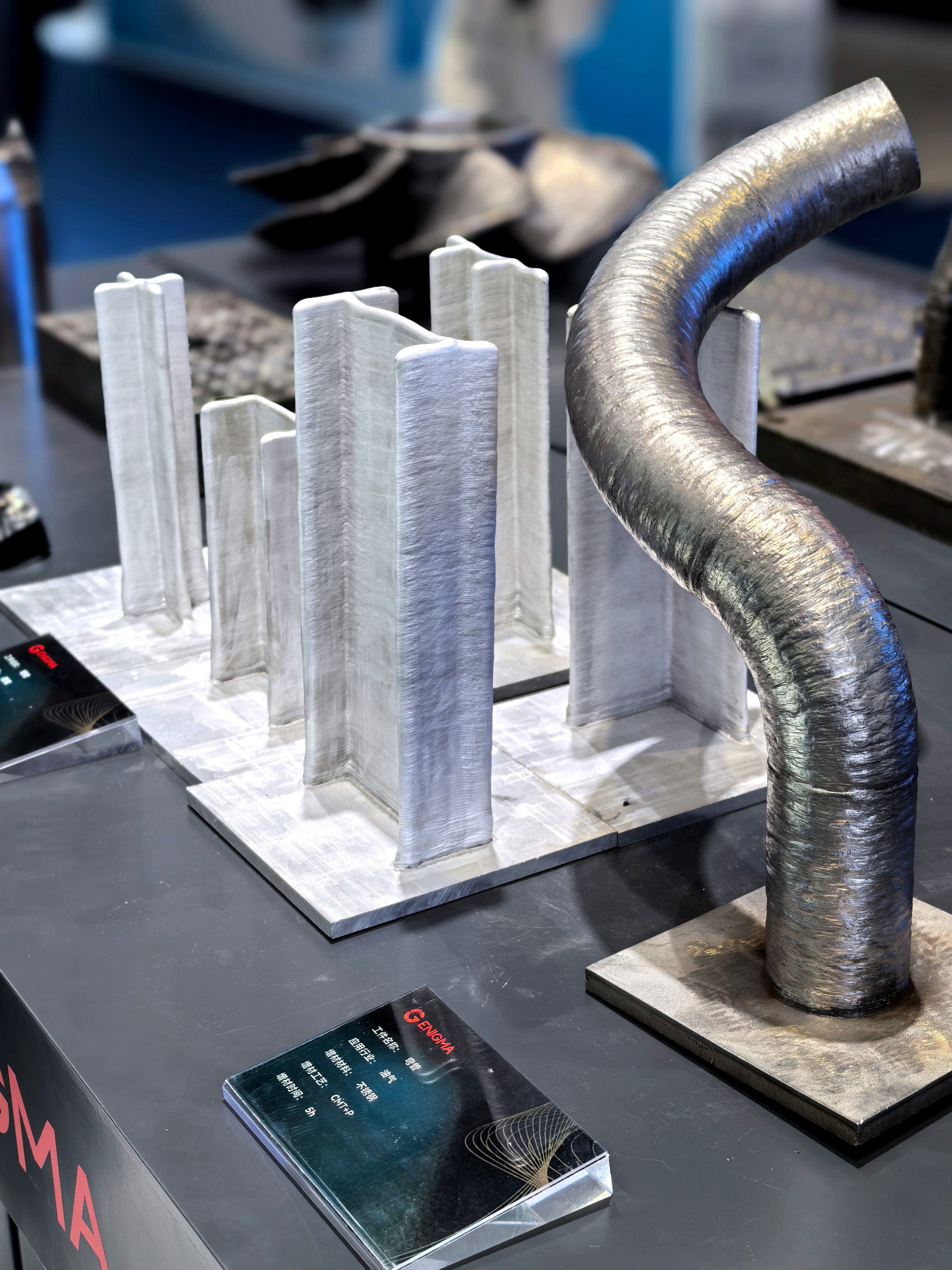
The resulting microstructure of Inconel 625 is dramatically different from the columnar structure of conventional DED processing. The average grain dimensions shift from elongated columns hundreds of microns long to more equiaxed grains measuring approximately 527 μm in length and 172 μm in width (aspect ratio 3.06). Fine-grained regions with grain sizes of 37 μm form at the interlayer interfaces. This refined, near-isotropic grain structure eliminates the directional strength variation that limits conventionally processed DED material.
The mechanical property improvement is substantial. Room temperature tensile testing of the 90° path Inconel 625 shows yield strength of 401 ± 12 MPa, ultimate tensile strength of 724 ± 5 MPa, and elongation of 57 ± 5%. These values compare favorably with traditional hot-rolled Inconel 625, which typically achieves yield strengths of 350-415 MPa and tensile strengths of 690-760 MPa. The DED material's plasticity-strength product — a measure of combined strength and ductility — reaches 41.3 GPa*%, significantly exceeding the 32.1 GPa*% typical of hot-rolled material.
High-Temperature Performance
Inconel 625 is specified for elevated-temperature service, and the DED-processed material maintains its advantage across the 400-850°C temperature range. Strength properties consistently exceed those of traditional cast alloys throughout this range. Elongation remains high below 700°C, with only a slight decrease observed above this temperature. Fracture mode transitions from ductile (intergranular dimpled fracture at 600°C) to mixed-mode at 850°C — behavior consistent with the alloy's intended high-temperature application window.
The interlayer interfaces in DED Inconel 625 — a potential concern for any additively manufactured material — demonstrate remarkable integrity. Microscopic analysis reveals that deformation-induced fracture consistently occurs within grain interiors, not at interlayer boundaries. No stress concentration is observed at the interfaces, confirming that the bonding between deposited layers is fully metallurgical and does not represent a structural weakness.
Frequently Asked Questions
How does DED improve Inconel 625 mechanical properties?
DED's rapid solidification (10³-10⁵ °C/second) produces a fine-grained microstructure. When combined with 90° interlayer path switching, the columnar grain structure transforms to near-equiaxed grains, eliminating directional property variation. The result is 401 MPa yield strength, 724 MPa tensile strength, and 57% elongation — outperforming conventional hot-rolled Inconel 625 in strength-ductility combination.
What is print path switching and why does it matter for Inconel 625?
Print path switching rotates the deposition direction by 90° between successive layers. This interrupts the epitaxial columnar grain growth that occurs when all layers are deposited in the same direction. The remelted surface of the previous layer provides new nucleation sites, promoting equiaxed grain formation and eliminating the anisotropic mechanical properties that columnar microstructures produce.
How do DED Inconel 625 properties compare to traditionally manufactured material?
DED Inconel 625 with optimized 90° path switching achieves a plasticity-strength product of 41.3 GPa*% versus 32.1 GPa*% for hot-rolled material. This indicates superior combined strength and ductility. The fine-grained microstructure developed during rapid solidification contributes to property values that meet or exceed wrought material specifications across the full mechanical property suite.
Does DED Inconel 625 maintain strength at high temperatures?
Yes. DED Inconel 625 maintains strength exceeding traditional cast alloys from 400°C to 850°C. Ductility remains stable below 700°C, decreasing moderately above this temperature. The material transitions from ductile to mixed-mode fracture between 600°C and 850°C, consistent with the expected high-temperature behavior of nickel-based superalloys in this service range.
Are the interfaces between DED layers a weakness in Inconel 625?
No. Microscopic analysis confirms that fracture in DED Inconel 625 occurs within grain interiors, not at interlayer interfaces. No stress concentration is observed at layer boundaries. The remelting of the previous layer's surface during deposition of the subsequent layer produces full metallurgical bonding, and the interface regions are not structurally distinguishable from the bulk deposit material.
Can DED Inconel 625 be heat treated after deposition?
Yes. DED Inconel 625 can undergo solution annealing and aging treatments consistent with the alloy's standard heat treatment specifications. Post-deposition heat treatment relieves residual stresses from thermal cycling during deposition and can further homogenize the microstructure. The specific heat treatment cycle depends on the service conditions — stress relief at 870°C, solution treatment at 980-1,150°C, or full solution and aging for maximum elevated-temperature properties.