
 EN
EN
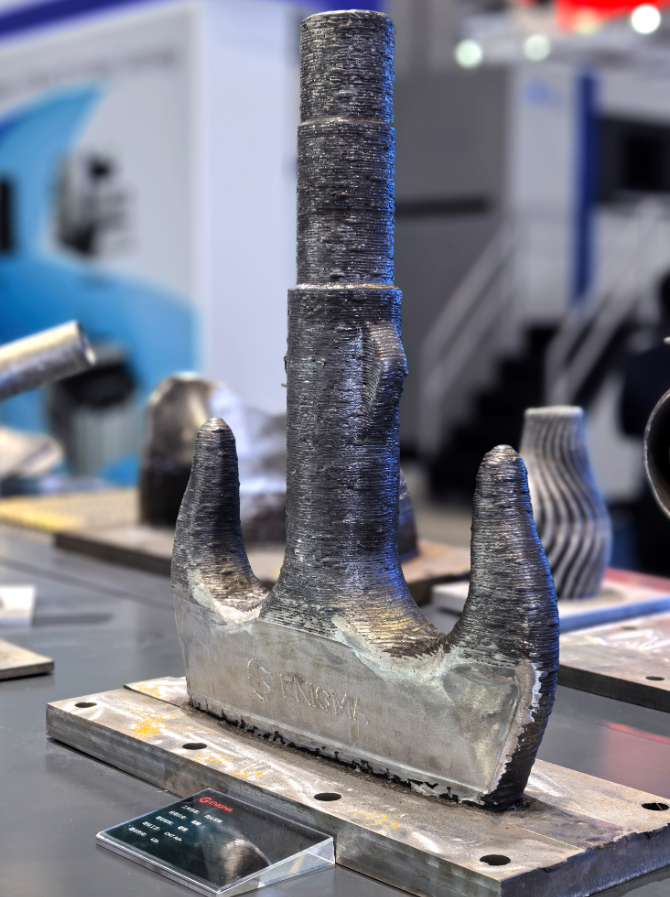
3D Printing Prototype: Rapid Design Iteration Before Production
A consumer electronics manufacturer developing a new smartphone frame needed to evaluate three candidate aluminum alloy designs for drop-test performance. The traditional approach — machining prototypes from extruded stock — required four weeks per design iteration and limited the team to one geometry per alloy because machining complex internal rib structures from solid billet was prohibitively expensive. A laser 3D printing prototype service produced all nine combinations (three alloys × three geometries) in 12 days using DED technology with aluminum wire feedstock. Drop testing eliminated two designs within the first week, and the winning geometry moved to tooling commitment three months ahead of schedule.
A laser 3D printing prototype does more than produce a physical part faster. It removes the tooling barrier that has historically forced design teams to commit to a single concept before testing it — a commitment that becomes exponentially more expensive to reverse as the project moves toward production.
The Prototype Bottleneck
Traditional metal prototyping routes each carry a fundamental limitation. CNC machining from solid stock can produce any geometry that tools can reach — but internal channels, lattice structures, and topology-optimized organic shapes are either impossible or require multi-axis setups with extensive fixturing. Each design change means reprogramming, new fixtures, and new setup time. Investment casting produces complex shapes but requires a wax pattern die — $5,000-30,000 in tooling that takes four to eight weeks to produce and is committed to a single geometry. Metal injection molding shares the same tooling barrier with even higher die costs.
The result is that most metal product development programs test two to three design variants — the minimum necessary to meet specification — rather than the five to ten that would be explored if each iteration did not cost weeks and thousands of dollars. The best design is often not tested because the iteration economics prevent the exploration that would discover it.
How Laser 3D Printing Changes Prototype Economics
A laser 3D printing prototype system — whether laser powder DED, arc-based WAAM, or laser wire DED — fabricates metal parts directly from CAD data with no tooling, no fixtures, and no setup beyond the initial build plate preparation. The CAD file is processed through CAM software that generates the deposition toolpath, and the machine deposits metal layer by layer to build the part. When the design changes, the CAD file is updated and the software generates a new toolpath — no reprogramming, no new tooling, no new fixtures.
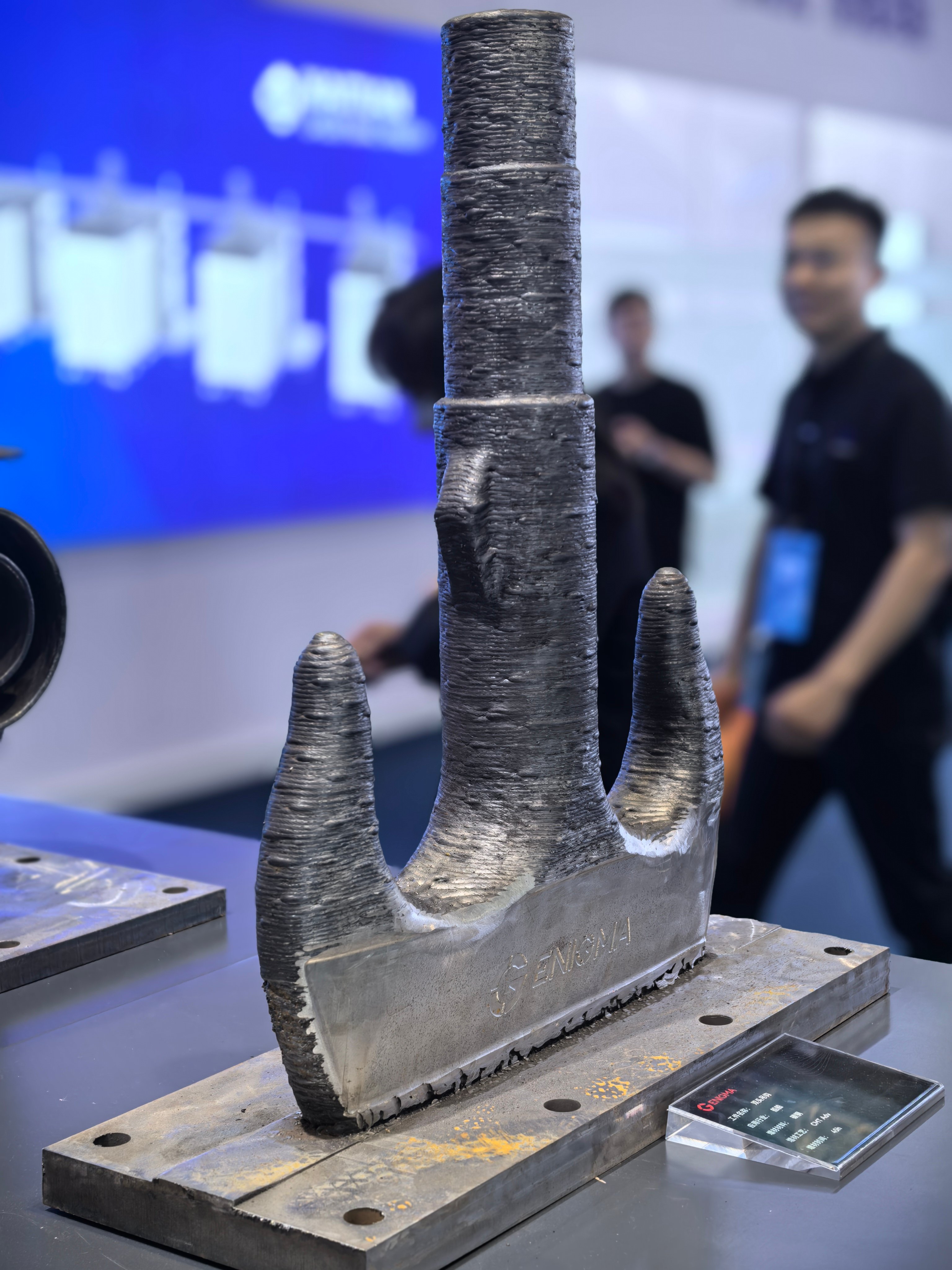
The cycle time advantage is decisive. A machined metal prototype requires CAM programming (2-8 hours), machine setup and fixturing (4-16 hours), machining (4-40 hours depending on complexity), and secondary operations. Total cycle time: 2-10 days per iteration for simple parts, 2-6 weeks for complex parts. A laser 3D printing prototype requires CAM programming (0.5-2 hours with automated software), build plate preparation (0.5 hours), deposition (2-20 hours depending on size), and post-processing — typically support removal and minimal finish machining. Total cycle time: 1-5 days regardless of geometric complexity. Internal channels, lattice structures, and topology-optimized shapes add no time to additive manufacturing; they add hours to days in machining.
The software component of laser 3D printing prototype systems has matured to the point where non-specialist engineers can generate build-ready toolpaths. Dedicated DED CAM platforms support multiple heat sources (arc, laser, plasma), multiple feedstock forms (wire, powder), and multiple motion systems (CNC, robot). Path optimization algorithms automatically manage deposition parameters for material-specific requirements. Simulation tools verify accessibility, detect collisions, and validate the build strategy before metal touches substrate.
Testing Variants in Parallel
Because a laser 3D printing prototype system incurs no tooling cost per design change, multiple variants can be produced simultaneously or sequentially at marginal cost equal to material and machine time. Nine design variants that would cost 45,000-270,000 in tooling for investment casting prototypes cost 4,500-9,000 in materials and machine time for additive prototypes — a 90% cost reduction that makes genuine design exploration economically feasible.
The risk reduction value exceeds the direct cost savings. Discovering a design flaw during prototype testing costs the materials and time for an additional prototype iteration — a few thousand dollars and a few days. Discovering the same flaw after committing $100,000 to injection molding dies or forging tooling costs the entire tooling investment plus the schedule delay for rework. The laser 3D printing prototype shifts the failure point earlier in the development cycle when failures are cheap.
Frequently Asked Questions
How fast can a laser 3D printing prototype produce a metal part?
A functional metal prototype can be produced in 1-5 days from CAD file receipt, depending on part size and material. Small titanium or steel parts (under 500 grams) complete in hours. Mid-size components (5-20 kilograms) require 1-2 days of deposition plus finish machining. The cycle time is independent of geometric complexity — organic shapes with internal features print as quickly as simple blocks.
How does laser 3D printing prototype cost compare to CNC machining prototypes?
For simple geometries, CNC machining is typically cheaper per part. For complex geometries — internal channels, lattice structures, topology-optimized shapes, and parts requiring multi-axis setups — additive prototyping is 30-70% cheaper because complexity adds no cost. The per-design-change cost for additive is near zero (software regeneration only), while CNC changes require reprogramming and new fixturing.
Can a 3D printed metal prototype be tested like a production part?
Yes. Laser DED and WAAM prototypes are fully dense metal with mechanical properties that meet or exceed cast material specifications. Prototypes undergo the same mechanical testing — tensile, fatigue, hardness, corrosion — as production parts. The rapid solidification inherent to additive processes often produces finer grain structures with properties exceeding conventionally processed material.
What materials can be used for laser 3D printing prototypes?
Titanium alloys (Ti-6Al-4V), nickel-based superalloys (Inconel 625, 718), stainless steels (316L, 17-4PH), aluminum alloys, tool steels, and cobalt-chrome alloys are commercially available. The material used for prototyping can be the same as the production material, enabling direct correlation between prototype test results and production component performance.
Can the prototype process transition to production without requalification?
Yes, when the same DED equipment and process parameters are used for both prototype and production. The thermal history — cooling rate, interlayer temperature, and deposit geometry — is controlled identically. Process parameters validated during prototyping transfer directly to production. This eliminates the traditional gap between prototype methods (often machining) and production processes (casting or forging) that requires separate material qualification.
How many design iterations can a laser 3D printing prototype program support?
A typical development program supports 5-15 design iterations within a 6-12 week prototyping phase. Each iteration incorporates test feedback and design refinements at a cycle time of 1-5 days and marginal cost of materials and machine time. This iteration throughput is 3-5 times what conventional prototyping methods support, enabling more thorough design optimization before tooling commitment.