
 EN
EN
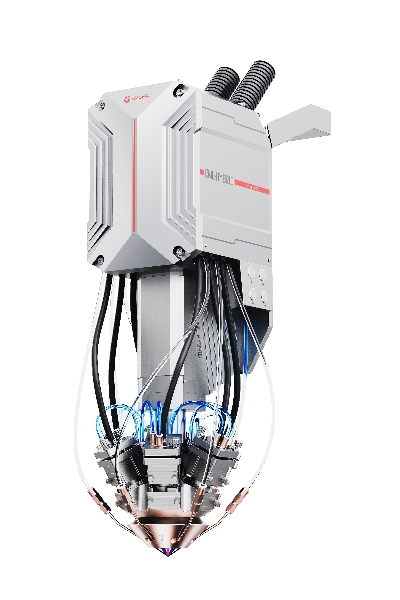
Precise Microstructural Control And Thermal Dynamics In Direct Energy Deposition
Direct energy deposition enables exceptional microstructural control through extreme thermal gradients and rapid solidification, conditions largely unattainable in conventional casting or forging. Localized energy input drives high cooling rates, suppressing coarse grain growth and yielding fine, uniform microstructures that enhance yield strength via established metallurgical relationships. Crucially, epitaxial growth occurs as each new molten layer solidifies by inheriting the crystallographic orientation of the underlying, partially remelted substrate. This allows deliberate engineering of columnar, directionally solidified, or single crystal like structures that remain essential for high performance turbine components where grain boundary sliding dictates failure. By tuning scan strategies and thermal gradients, engineers can shift seamlessly between columnar and equiaxed grain morphologies, achieving a level of microstructural governance impossible with subtractive or traditional near net shape methods. Furthermore, the swift liquid to solid transition fundamentally suppresses elemental segregation, the uneven partitioning of alloying elements that routinely plagues slow cooling processes like casting. The swift transition traps solute atoms at the advancing interface, limiting diffusion and preserving chemical homogeneity, which is exceptionally critical for precipitation hardened alloys to prevent brittle phase formation and enhance reliability for critical aerospace assets.
Beyond thermal parameters, advanced additive workflows deliver a unique synergy of strength, fatigue resistance, and mechanical uniformity by directly tailoring microstructure during deposition. Fine, equiaxed grains enhance dislocation pinning and raise yield strength without sacrificing ductility, enabling deposits to match or exceed rigorous wrought specifications. High cycle fatigue testing demonstrates substantial improvements in endurance limits over cast equivalents due to minimal porosity. When parameters are properly tuned, pore sizes remain well below the critical flaw threshold for crack initiation, avoiding macro scale shrinkage voids and bypassing the need for hot isostatic pressing to reach full density. Additionally, layer by layer deposition typically introduces mechanical anisotropy, but multi axis motion breaks this pattern by continuously reorienting material addition relative to complex load paths. Advanced multi axis systems reduce tensile anisotropy drastically, enabling near isotropic behavior by disrupting columnar grain continuity and promoting randomized texture, making fatigue crack propagation less directional and structural response more akin to forged metal.
Functional Benefits Including Density, Hybrid Microstructures, And Repairability
Directed energy deposition consistently achieves near theoretical density in as built parts without requiring post process hot isostatic pressing. Unlike powder bed fusion, localized melting and rapid solidification inherently forge dense, low porosity microstructures, eliminating the time, cost, equipment overhead, and distortion risks associated with prolonged thermal exposure. For maintenance operations, this means worn components can be restored to near original density in situ, without requiring full disassembly or exposing the entire structure to high pressure heat treatment. The resulting high integrity fusion significantly improves toughness and fatigue resistance for aero engine parts and high value tooling, translating directly into longer service life and faster turnaround times for mission critical operations.
Moreover, the capacity to co-deposit multiple materials via synchronized powder or wire feeding enables functional grading and hybrid microstructures that traditional manufacturing cannot replicate. Engineers can spatially tailor composition across a single component, transitioning seamlessly from a tough, ductile core to a wear or corrosion resistant surface. This directly addresses the classic strength versus toughness tradeoff, while rapid solidification further refines local microstructures and permits metastable phase formation to boost operational performance. Advanced aerospace applications successfully utilize superalloy gradients to restore structural integrity while integrating protective surface layers in a single setup. By transforming additive manufacturing from simple shape replication into advanced material design, this technology unlocks location specific property engineering and redefines performance boundaries across demanding industrial sectors.
Frequently Asked Questions
-
What is direct energy deposition? Direct energy deposition is an advanced additive manufacturing process that uses localized energy, such as a laser or electron beam, to melt material like powder or wire and deposit it layer by layer for precise microstructural customization.
-
How does grain refinement occur in this process? The technology introduces rapid cooling rates that suppress coarse grain growth and create fine, uniform microstructures, significantly enhancing mechanical properties such as yield strength.
-
What makes deposition superior for repairing worn components? It achieves near theoretical density in as built parts and eliminates the need for post process hot isostatic pressing, enabling efficient in situ repairs without requiring major disassembly.
-
Can multi axis motion reduce mechanical anisotropy? Yes, multi axis deposition motion reorients material placement relative to loading directions, disrupting columnar grain continuity to reduce tensile anisotropy and enhance near isotropic behavior.
-
What materials are compatible with these advanced systems? The technology is compatible with a wide range of materials, including nickel superalloys, advanced titanium grades, stainless steels, and complex composite or gradient materials for hybrid applications.