
 EN
EN
Superior Strength To Weight Ratio Through Directed Energy Deposition Aluminum
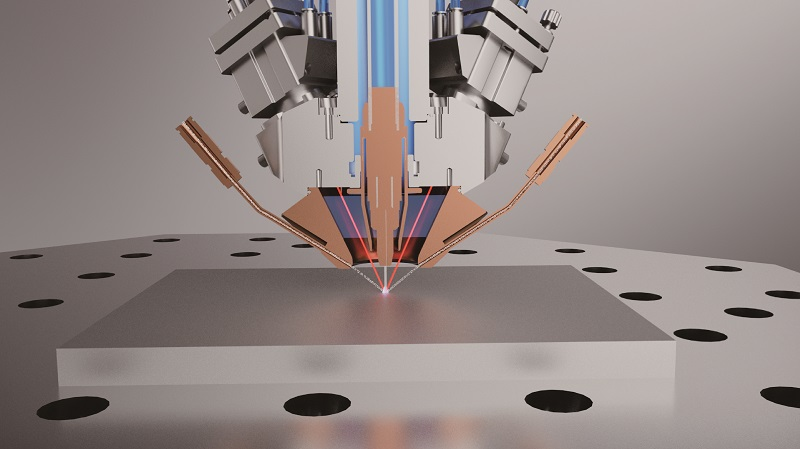
Directed energy deposition aluminum achieves a decisive strength to weight advantage through ultrafine dendritic microstructures unattainable with conventional casting or forging. Laser based processing enables extreme cooling rates, suppressing coarse grain growth and producing hierarchical networks of sub micron dendrites. In both standard alloy series, this refinement elevates specific yield strength significantly over wrought counterparts of identical composition, as confirmed in collaborative studies between top aerospace research centers and additive manufacturing labs. The mechanism is twofold: dense dislocation forests within interdendritic regions impede slip, while the fine scale distribution of strengthening intermetallic phases delays crack initiation. Even without post process heat treatment, these aluminum components achieve exceptional specific yield strength, outperforming many structural steels and titanium alloys. This makes the material ideal for mass critical applications like satellite brackets and drone frames, where every gram saved directly extends range or payload capacity.
A persistent misconception holds that additive aluminum cannot reach the peak hardness of conventional T six tempers due to non equilibrium microstructures resisting age hardening. Rigorous experimentation has disproven this notion. Advanced manufacturing studies have demonstrated that a tailored post deposition heat treatment, involving precise solutionizing followed by water quenching and dual stage aging, fully restores alloy hardness back to peak industrial benchmarks. The ultrafine dendritic structure actually accelerates the dissolution of metastable phases, shortening required solution times and enabling homogeneous precipitation of fine hardening particles. This yields a substantial improvement in tensile strength with no loss in ductility. Designers can therefore confidently specify processed high strength alloys for critical components, including landing gear fittings and suspension rockers, knowing optimized heat treatments deliver performance on par with wrought equivalents while fully preserving lightweighting benefits.
Thermal Stability And Oxidation Resistance For Demanding Lightweight Applications
Ensuring reliable performance under thermal stress is vital for lightweight components in electric vehicle battery enclosures and aerospace heat management systems. Additive aluminum uniquely combines high thermal conductivity with robust oxidation resistance. Fabricated components maintain superior thermal conductivity even after hundreds of thermal cycles between extreme sub zero and elevated temperatures, easily exceeding benchmarks required for effective heat dissipation. The fine dendritic microstructure provides short, direct phonon pathways that minimize thermal resistance. Concurrently, these alloys form a dense, adherent oxide layer rapidly upon exposure to elevated temperatures, limiting weight gain significantly. Crucially, this protective layer remains crack free under repeated thermal expansion and contraction, mitigating thermal runaway risks in electric vehicle battery packs. For aerospace heat exchangers, sustained thermal conductivity and oxidation stability ensure cooler, more efficient operation and extended service life.
Hot tearing remains a primary challenge when processing high magnesium aluminum feedstocks in additive systems. Their wide solidification range and high thermal contraction generate tensile stresses that initiate cracks along grain boundaries. Effective mitigation begins with precise preheat control: maintaining substrate temperatures within an optimized window reduces thermal gradients, slows cooling rates, and allows residual liquid to feed solidifying dendrites. Scan strategy optimization further minimizes defects, utilizing short track lengths, alternating scan directions, and optimized hatch spacing to promote uniform heat distribution and shrink the mushy zone. Real time melt pool monitoring adds closed loop precision, utilizing coaxial cameras and photodiodes to track dimensions and intensity, feeding data to controllers that dynamically adjust laser power or travel speed. Together, these integrated strategies enable crack free deposition of high magnesium aluminum, even on thin walled or geometrically complex parts.
Enabling Functional Lightweight Systems Through Hybrid Manufacturing
A hybrid manufacturing approach combining laser based directed energy deposition with subtractive computer numerical control machining demonstrates how to radically lighten critical aerospace components without compromising performance. In recent industry initiatives, structural landing gear brackets were redesigned using topology optimization. Laser deposition was then used to selectively build high strength aluminum only along computed load paths, while original forged bases retained structural continuity. After deposition, parts underwent precision finish machining, achieving dramatic weight reductions versus conventional forgings while fully retaining stiffness under simulated operational loads. This mass saving translates directly into improved aircraft fuel efficiency and reduced emissions. The hybrid process also slashes material waste compared to full subtractive manufacturing from solid billets by depositing metal only where functionally required, creating functionally optimized, lightweight systems previously unachievable through traditional methods alone.
Frequently Asked Questions
-
What is directed energy deposition aluminum? Directed energy deposition aluminum is an advanced material produced using a laser directed deposition process that achieves superior strength to weight ratios and unique thermal and mechanical properties.
-
How does this material achieve superior specific yield strength? It achieves superior specific yield strength through ultrafine dendritic microstructures formed via rapid solidification during the manufacturing process, leading to enhanced mechanical properties.
-
Can additive aluminum match the hardness of conventional treated alloys? Yes, with optimized post process heat treatment involving solutionizing, quenching, and aging, the material can fully restore the hardness and mechanical performance of standard peak tempers.
-
What applications benefit from this material's thermal conductivity? Applications such as electric vehicle battery enclosures and aerospace heat management systems benefit significantly, ensuring efficient heat dissipation under cyclic thermal loads.
-
How is hot tearing mitigated during processing of high magnesium alloys? Hot tearing is mitigated through precise preheat control, optimized scan strategies, and real time melt pool monitoring during the deposition process.
-
What is hybrid additive manufacturing and how does it reduce weight? Hybrid manufacturing combines laser deposition with machining, enabling lightweight and optimized designs by depositing material only where necessary to reduce structural weight and material waste.