
 EN
EN
Final English Blog Article
Cutting Lead Times And Eliminating Tooling With Large Metal Three D Printing
Large metal three dimensional printing is transforming the production timeline for heavy machinery parts. Traditional manufacturing of castings, forgings, or large machined components often requires months, first building patterns, molds, and fixtures, then weeks of machining and assembly. By eliminating tooling, large metal printing compresses the entire process. Industry data shows that printing can slash tooling lead times significantly, turning weeks into days. Applied to heavy equipment, a large excavator arm or turbine housing that historically took many weeks from design to finished part can now be printed much faster, achieving a reduction of over eighty percent. This leap is possible because the technology deposits metal directly, layer by layer, without the need for custom tooling or extended setup. The result is a dramatic acceleration of the supply chain, enabling manufacturers to respond to urgent orders, validate designs faster, and slash downtime for critical machinery.
For custom and low volume heavy equipment parts, tooling costs are a major barrier. Molds, dies, and specialized jigs for a single complex component can easily exceed tens of thousands of dollars, making small batches economically unviable. Large metal printing eliminates these upfront investments entirely. By building parts directly from a digital file, manufacturers avoid the cost of pattern making, casting tooling, and dedicated machining fixtures. A custom mounting bracket for a mining truck that might require massive traditional tooling expenses can be produced at a fraction of the cost in material and machine time. This paradigm shift opens the door to affordable, on demand production of spare parts, one off prototypes, and legacy components where previously the economics of tooling made such projects impossible. The result is a leaner, more agile manufacturing process that can profitably serve even the most specialized heavy machinery needs.
Scaling Up Through Wire Arc Additive Manufacturing Processes
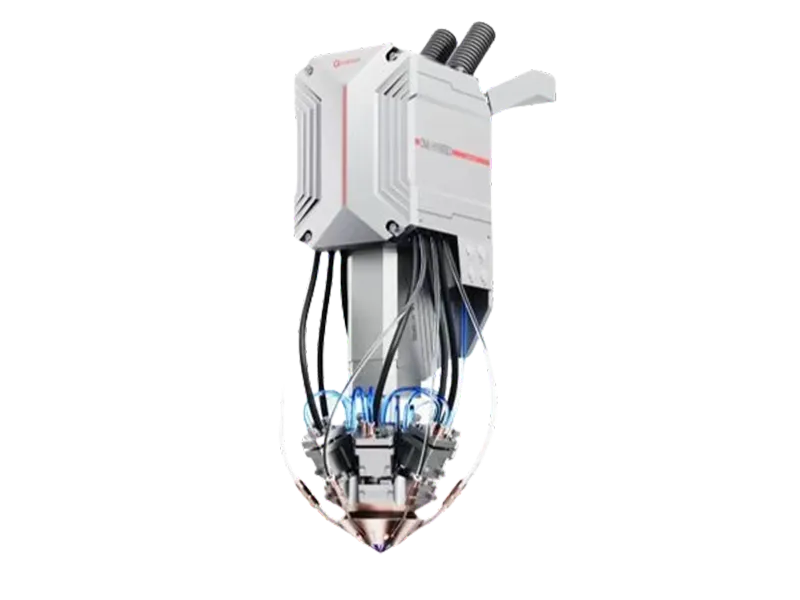
Wire arc additive manufacturing has become the dominant technology for large metal printing in heavy machinery, driven by its scalability, speed, and cost advantages. Unlike powder bed fusion, which is confined to small build chambers and expensive materials, this technique leverages standard welding equipment and metal wire to produce parts weighing several hundred kilograms to multiple tons. The process typically deposits high volumes of material per hour, making it one of the fastest metal additive methods available. This high throughput is paired with near perfect material utilization: the wire is fully consumed, resulting in virtually no waste. Feedstock costs are substantially lower, as steel or nickel alloy wire can be significantly cheaper per kilogram than equivalent powder. Additionally, the process often employs advanced cold metal transfer technology, which minimizes heat input and reduces residual stresses and distortion, improving part quality. The technology supports a wide range of engineering alloys, including carbon steel, stainless steel, superalloys, and titanium, meeting the demanding requirements of heavy equipment.
For multi tond structural components, deposition rates and material efficiency translate directly to lower costs per kilogram. Standard systems routinely achieve high hourly deposition rates, with advanced setups reaching top productivity for steel. This high productivity means that a massive component can be printed in a fraction of the lead time required by traditional casting or machining. Material utilization is near one hundred percent due to the wire based process, virtually eliminating the scrap and waste of subtractive methods. The cost per kilogram of deposited metal is far below laser powder methods, driven by cheaper wire feedstock and simpler equipment. The reduced material waste also lowers environmental footprint and disposal costs, strengthening the economic case for large scale adoption. This combination of speed, efficiency, and low cost makes wire arc technology the preferred method for producing heavy machinery parts on demand.
Redefining Design And Serviceability Through Advanced Printing
Large metal printing enables engineers to rethink how heavy machinery components are constructed. Instead of welding, bolting, or casting multiple parts, a single additive build can consolidate dozens of discrete elements into one monolithic structure. This consolidation eliminates joints, reduces potential leak paths, and cuts assembly time significantly in hydraulic manifolds and structural brackets. The resulting parts often weigh much less because material is placed only where loads require it, and internal lattice structures replace solid sections. In mining excavator arms, for example, a consolidated design improves fatigue resistance and simplifies maintenance. The geometric freedom of additive manufacturing also allows for conformal cooling channels that enhance thermal performance, directly boosting the reliability of high stress engine or transmission housings. By removing fasteners and weld seams, manufacturers achieve higher integrity assemblies that withstand harsh operating conditions with fewer failure points.
For heavy machinery that operates for decades, sourcing replacement parts for legacy models is a constant challenge. Traditional casting or forging requires expensive tooling that may no longer exist, and minimum order quantities often make small batch production uneconomical. Large metal printing transforms this dynamic by enabling a digital inventory: a part can be printed directly from a computer aided design file, without any tooling, within days. A leading mining equipment provider drastically reduced lead time for a critical pump impeller after adopting wire arc additive manufacturing. This on demand approach eliminates the need to warehouse low turnover spares and ensures that even geometrically complex components with internal lattices or conformal features can be reproduced accurately. Operators benefit from reduced downtime and lower inventory carrying costs, while the ability to modify designs between builds means that legacy parts can be improved for better wear resistance or performance without new tooling.
Frequently Asked Questions
-
What is large metal three dimensional printing? Large metal three dimensional printing is an advanced manufacturing process that builds metal components layer by layer directly from digital files, eliminating the need for traditional tooling like molds or fixtures.
-
How does large metal three dimensional printing reduce lead times? By bypassing tooling and setup requirements, large metal printing compresses production from months to weeks, achieving lead time reductions of up to eighty five percent.
-
What are the cost benefits for heavy equipment parts? Large metal printing eliminates tooling costs, making custom and low volume production economically viable by producing components for a fraction of traditional tooling expenses.
-
What is wire arc additive manufacturing and how is it used? Wire arc additive manufacturing is a scalable and cost effective form of metal printing that uses metal wire and standard welding equipment to manufacture large parts with high material efficiency.
-
Can this technology produce spare parts for legacy machinery? Yes, it enables rapid on demand production of obsolete or complex spare parts directly from digital files, reducing downtime and eliminating the need for expensive tooling or inventory.