
 EN
EN
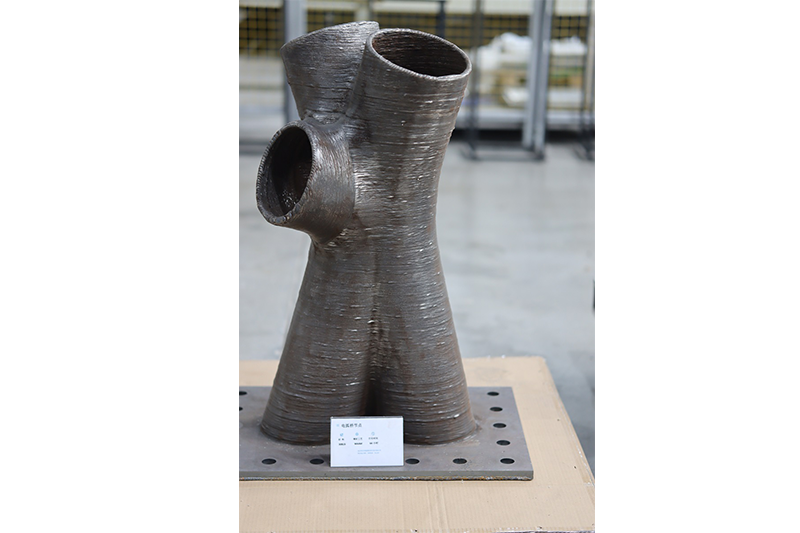
Superior Material Properties Make Inconel Six Twenty Five Ideal for Metal Three D Printing
Inconel six twenty five sustains critical mechanical loads at elevated temperatures where many alloys soften dramatically. Its solid solution strengthened nickel chromium molybdenum matrix retains a high tensile strength at elevated temperatures, preserving a significant portion of its room temperature value. Laser powder bed fusion enhances this performance by producing a fine grained microstructure that improves creep resistance, as confirmed in recent additive manufacturing research. This grain refinement, combined with thermally induced precipitation of intermetallic phases during service, delays thermal softening and micro cracking. As a result, gas turbine components, exhaust manifolds, and heat exchanger cores maintain dimensional stability and safety margins under cyclic thermal loading. Operating reliably in high temperature ranges without protective coatings reduces system complexity and long term maintenance costs.
The alloy high chromium and molybdenum content forms a dense, adherent chromium oxide scale that resists spalling, even in sulfur containing atmospheres and chloride laden environments. In printed form, Inconel six twenty five delivers pitting and crevice corrosion resistance equivalent to wrought material, achieving high critical pitting temperatures per standard testing protocols. This makes it indispensable for marine exhaust systems, geothermal wellheads, and chemical reactor internals exposed to seawater, sour gas, or acidic brines. Surface analyses confirm that three dimensional printed parts develop a compact, self healing oxide layer that effectively blocks ion ingress, enabling long service life with minimal thickness loss, even under alternating wet and dry conditions. Monolithic printed components eliminate the need for costly corrosion resistant cladding or frequent replacements.
Excellent Weldability and Design Freedom in Additive Manufacturing
Inconel six twenty five metallurgy inherently suppresses solidification cracking, a leading cause of failure in high strength alloys during additive manufacturing. Its nickel based composition, reinforced with niobium, avoids low melting point eutectics that concentrate thermal stress. Process parameter studies demonstrate that both laser powder bed fusion and directed energy deposition routinely yield crack free parts with densities exceeding ninety nine point nine percent. This low sensitivity to hot tearing supports thicker melt pool overlaps and higher deposition rates, reducing build time while preserving structural integrity. Post processing is simplified: minimal rework is needed to address residual porosity, and gentle stress relief cycles suffice. The resulting defect free fusion quality makes the material ideal for complex, safety critical components subjected to high cycle fatigue and thermal shock without hidden flaws.
Additive manufacturing unlocks geometries impossible with traditional methods. Lattice structures, printed as interconnected networks, reduce part weight significantly while preserving mechanical strength, benefiting aerospace brackets and heat exchangers. Conformal cooling channels, which follow a part contour rather than relying on straight drilled passages, improve thermal performance in turbine blades and injection molds, boosting cooling efficiency substantially. The alloy high temperature stability ensures these features survive cyclic loading at elevated temperatures. In printing applications, favorable melt pool fluidity enables extremely thin lattice struts, supporting lightweight, thermally optimized designs. Engineers can integrate cooling circuits directly into monolithic parts, eliminating brazed joints, reducing leak risks, and shortening development cycles.
Proven Industrial Adoption in Critical End Use Applications
Inconel six twenty five combination of high temperature strength retention and oxidation resistance has made it a cornerstone material for flight critical components. Printed fuel nozzles feature intricate internal cooling channels that reduce weight and improve combustion efficiency, designs unachievable via conventional machining. Leading engine manufacturers have secured airworthiness certification for printed nozzles and turbine parts, validating compliance with stringent standards. This shift accelerates production timelines and enables performance gains previously limited by manufacturability constraints.
In offshore, geothermal, and chemical processing applications, where chloride exposure, high temperatures, and corrosive media converge, this superalloy delivers unmatched integrity. Printed valve bodies, pump impellers, and heat exchanger cores combine superior pitting and stress corrosion cracking resistance with flow optimized internal geometries. In subsea manifolds and downhole tools, extended service intervals reduce unplanned downtime. Chemical reactors benefit from the alloy resistance to acidic degradation, lowering total lifecycle costs. By replacing multi part assemblies with monolithic, functionally integrated components, operators gain reliability, simplified maintenance, and improved operational uptime.
Frequently Asked Questions
-
What is Inconel six twenty five and why is it used in three dimensional printing? Inconel six twenty five is a nickel based superalloy known for its exceptional high temperature strength, corrosion resistance, and weldability. These properties make it ideal for printing complex parts for aerospace, energy, and marine industries.
-
How does Inconel six twenty five perform in high temperature environments? Inconel six twenty five retains a large percentage of its tensile strength at elevated temperatures, offering excellent performance in demanding applications like gas turbines and heat exchangers.
-
What are the advantages of this alloy in additive manufacturing? Additive manufacturing with this superalloy enables intricate geometries, part weight reduction, part consolidation, and enhanced corrosion resistance, reducing manufacturing time and maintenance costs.
-
Does Inconel six twenty five have good oxidation and corrosion resistance? Yes, its high chromium and molybdenum content form a dense oxide layer that resists oxidation and corrosion, even in aggressive environments such as seawater and sour gas.
-
What industries benefit the most from printing with Inconel six twenty five? Aerospace, energy, marine, and chemical processing industries benefit from its superior properties, enabling critical components to withstand extreme conditions.