
 EN
EN
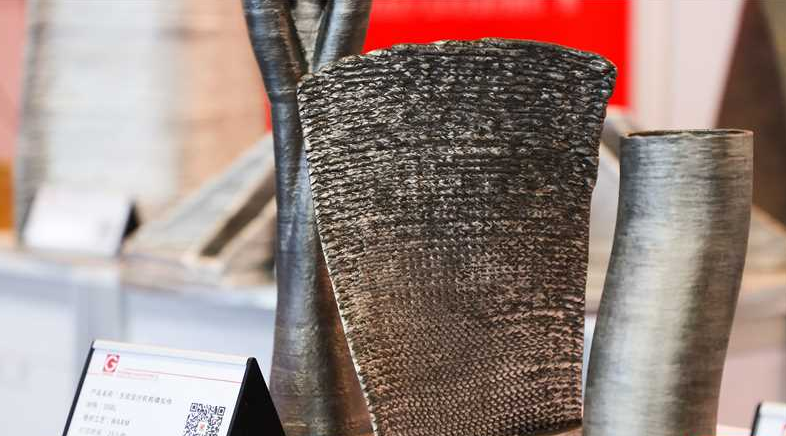
What Are Small-Batch 3D Printing Services?
What’s Small Batch Production in 3D Printing?
Small-batch 3D printing services use additive manufacturing to create functional end-use parts in small quantities (usually between 50 and 500 parts). Compared to traditional manufacturing methods, additive manufacturing does not have Minimum Order Quantities (MOQs) or require large capital tooling investments. This allows 3D printing services to create complex geometries when manufacturing components for industries like medical and aerospace manufacturing. To save their clients time and engineering resources, 3D printing services give flexibility for multiple designs. For small-batch quantities, 3D printing vs. injection molding saves manufacturers about 42% in cost per part (Additive Manufacturing Benchmark 2023).
Functional End-use Part 3D Printing Services vs. Prototyping and Mass Production Services
Small-batch 3D printing services quickly deliver products compared to prototyping and mass production services. They help avoid the lengthy mold production mass production services require, saving time and money. Compared to traditional methods of production, 3D printing services reduce time to market by 30-50%.
Key Advantages of a Small-Batch 3D Printing Service for Low-Volume Runs
Removal of Toolings Costs and Minimum Order Limitations
Molds and tooling in traditional manufacturing cost between $20,000 and $100,000, are a large investment, and require minimum orders. Small-batch 3D printing services completely eliminate these restrictions. Customers can manufacture one product, many to thousands of products, and many products at various levels of cost. This is especially beneficial for new startups needing to validate product demand or larger more established business needing to meet the demand for specialty products.
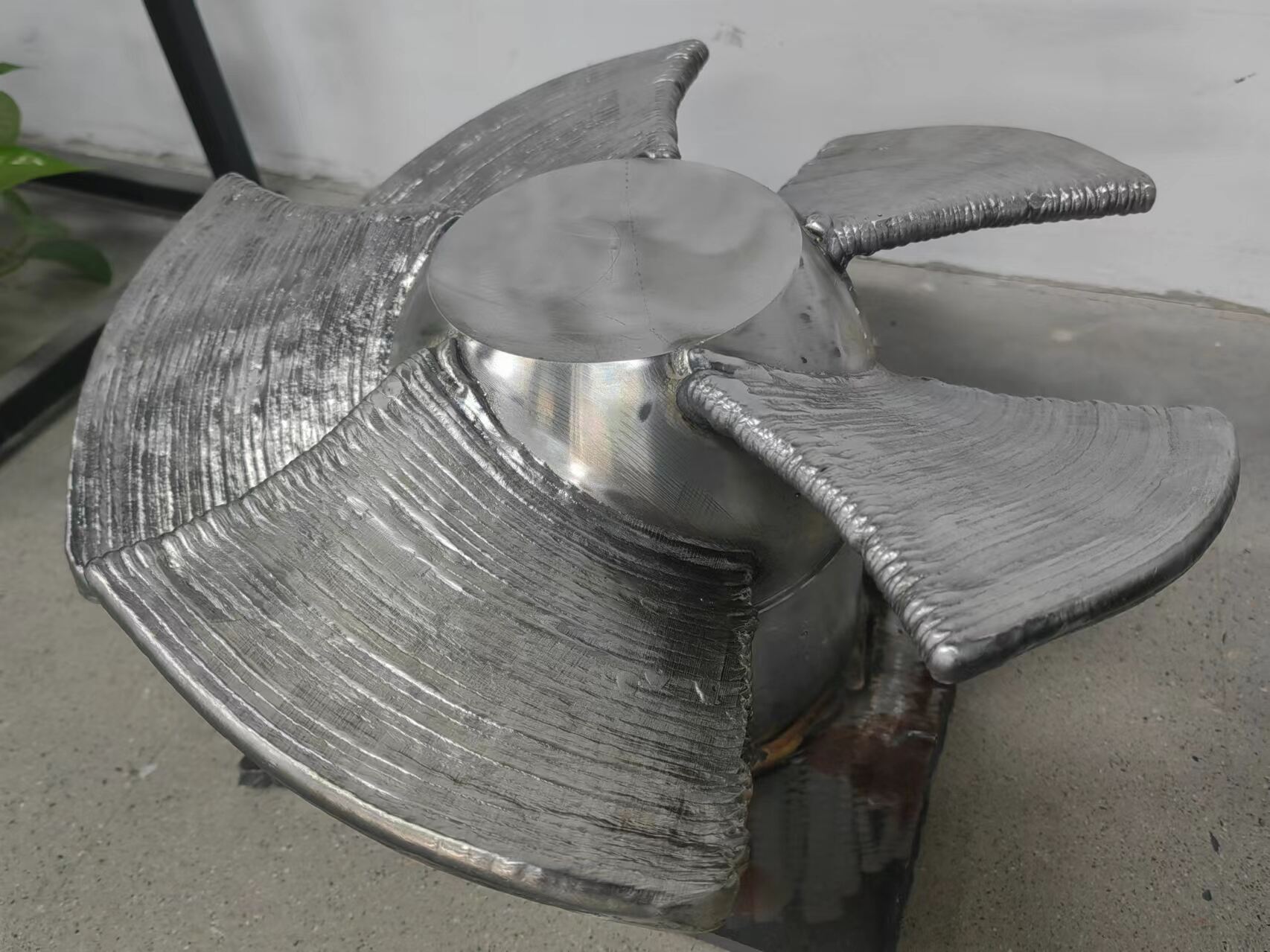
Reduce Inventory Risk and Improve Time to Market
Undesired and unnecessary excessive inventory results in wasted capital and potentially unusable, removed inventory. Due to the removal of the restrictions surrounding minimum orders, average warehousing costs are reduced by 60%. Consistent product demand allows for continuous production cycles, providing real-time feedback and product improvements and increasing product competitiveness in the market.
SLS 3D Printing: Why It’s the Best Technology for Consistent Small-Batch Production
The Benefits of SLS for Consistency, Surface Quality, and Diverse Surface Quality
Selective Laser Sintering (SLS) builds robust, end-use components from polymer powders in small-batch 3D printing service workflows. It doesn't have the tooling constraints that typically exist in other small-batch 3D printing workflows. Its unfused powder supports complex geometries—eliminating the need for physical supports—and maintains consistent mechanical properties. Many studies have shown that the approximation supports generally provide in additive particle supports is often achieved at the same strength level as injection molding, and that the strength of SLS printed nylon supports is within that approximation level. Surface finishes generally require much less post-processing than traditional alternative finishings to 3D printing, and as a result, complex assemblies that typically require multiple printing post-processing steps and, in some cases, are labor intensive to the extent of 30% post-processing labor savings when relatively labor intensive snap-fit joints are involved. SLS also stands out from the rest of the additive technologies in that the printing process provides a range of materials from rigid engineering-grade nylons used for structural components to elastomers in the range of tear-resistant TPUs, which can all be printed under the same process conditions. Uniform parameter quality also results in consistent quality, which greatly reduces the lead times (a savings of more than 50% in comparison to traditional types of additive technologies) from drawing to a finalized part.
Realistic Return on Investment: Cost and Time Savings of a Small-Batch 3D Printing Service
Quantified Information: 42% Cost Reduction Compared to Injection Molding (For a Production Run of Less Than 500 Units)
The need to pay for expensive injection molding tools and meet costly, minimum production order requirements vanishes with the introduction of a small-batch (less than 500 units) 3D printing service. Independent studies of small-batch 3D printing services show that the per-unit cost of production is 42% lower than the cost of a unit produced in an injection molding service, and more than a 50% reduction in the per-unit cost of materials. The need to meet minimum volume production runs means that the economics of low-volume production manufacturing have changed to a point where the manufacturing of production parts has become much more accessible.
Case Spotlight: Medical Device Startup Cuts Lead Time by 70%
The company's analysis put launch lead time at 13 months, passing up the competition by 5 months, and then assessing the cost-benefit of 3D printing versus other methods, low-cost printing had the final advantage of being able to print the entire low-cost three-dimensional multi material set of the brace.
Prototyping time shrunk from the (3 weeks) to the (3 hours)
Bridge production lead times dropped 70%
Inventory costs fell 45% using just-in-time manufacturing methods.
Each of these factors of 3D printing the brace made the client able to rapidly update the brace based on user experience, as well as rapid FDA testing. This also meant the client could rapidly bring new offerings to market, as well as the brace offerings maturing.
(5) Most Common Questions regarding Small-Batch 3D Printing Service
What is regarded as Small-Batch 3D Printing in terms of numbers range?
Generally speaking, the numbers range in Small-Batch 3D Printing is 50-500.
What is the cost difference Small-Batch 3D Printing and Injection Molding?
Generally speaking, Small Batch 3D printing shows about 42% cost difference as compared to injection molding, for runs less than, 500.
What examples of industries are small-batch 3D printing most beneficial?
The industries of Medical Devices, Aerospace and Automotive are some examples of industries, where small-batch 3D printing is most beneficial.
What is considered to be the most beneficial method for small-batch production?
Select laser Sintering, is considered to be the most beneficial method by far, due to the fuel efficiency, consistency, and as well as the new discovered ways and the reliability, and the new discovered fueld efficiency factors.